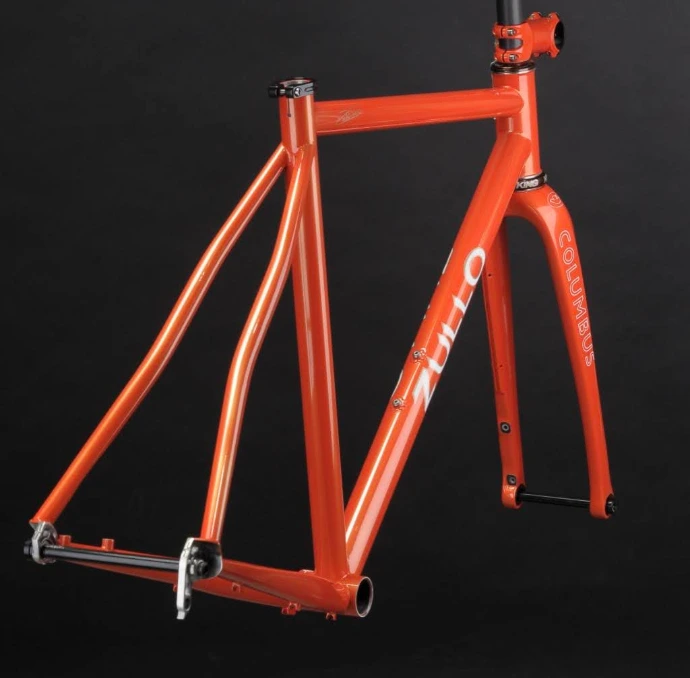
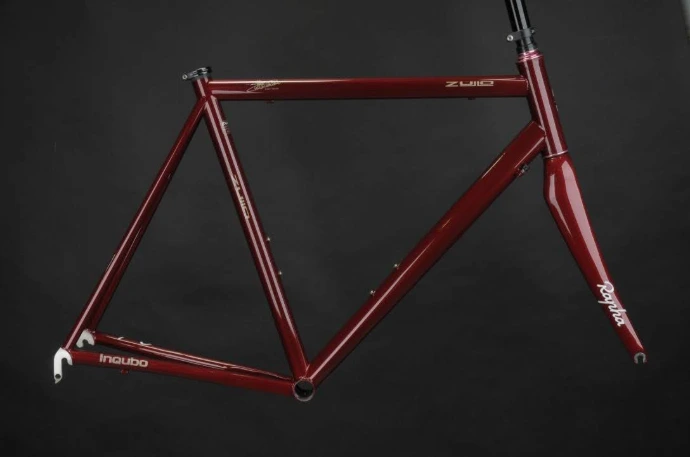
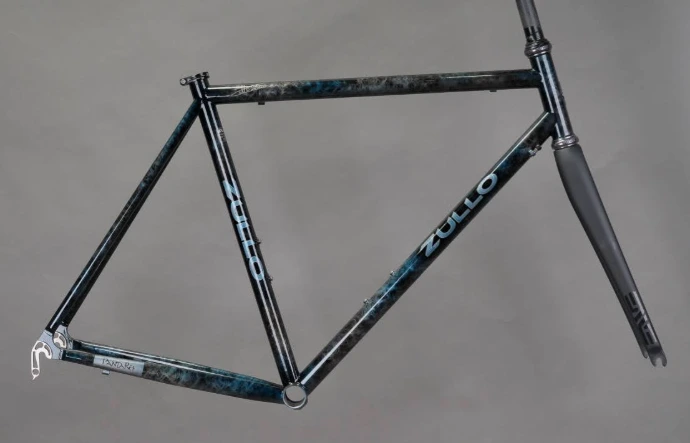
Where Every ZULLO Frame Begins
ZULLO: A History of Craft
ZULLO was never conceived as a brand in the modern sense. It began, as all enduring things do, with a man, a workshop, and a refusal to compromise.
A few kilometres from Lake Garda, in a bright and sunny atelier lined with cycling relics, emerging young welders and painters and marked by the quiet rhythm of handwork, Tiziano Zullo continues to build. Steel filings gather on the workbench. Drawings sit beside tools. The process is unchanged in spirit, if not in precision.
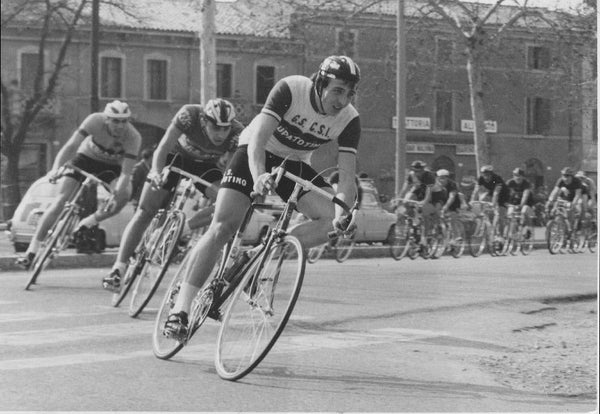
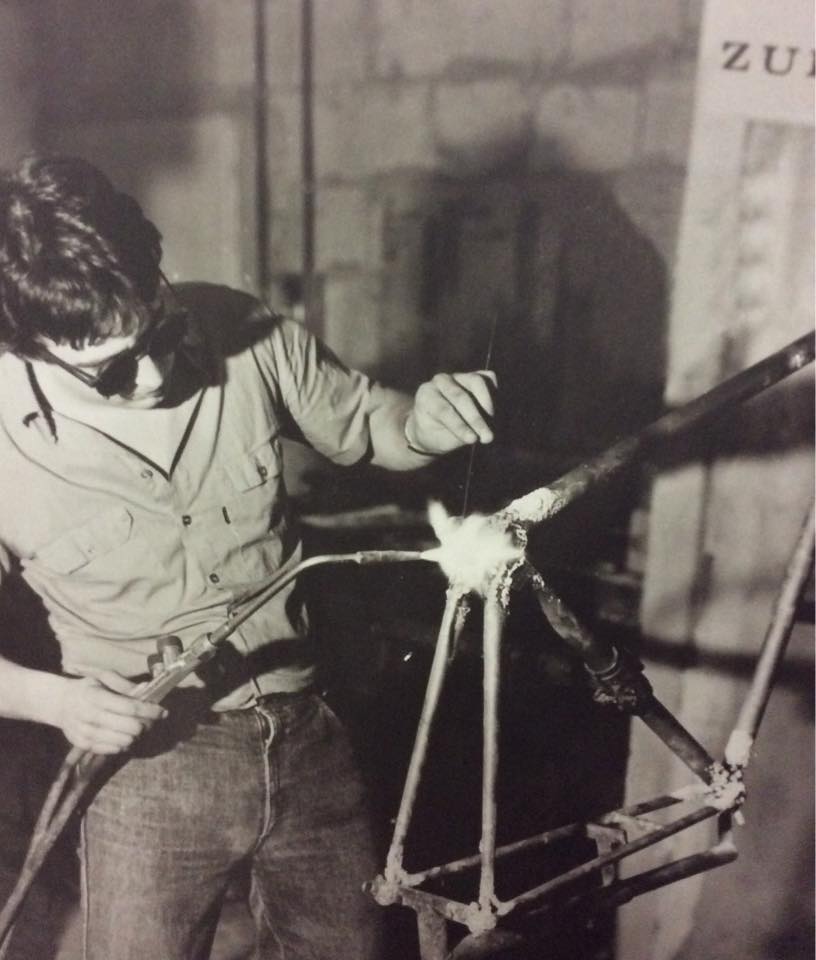
Born in Verona in 1952 and raised in the mountainous village of Stallavena, Tiziano discovered cycling early—riding at dawn before work, drawn not only to competition, but to what he would later describe simply as libertà. By 1973, he was learning to cut and weld tubes. By 1976, he had opened his own small workshop. At the time, northern Italy was home to hundreds of framebuilders, each producing for local brands, shops, and distributors. It was within this ecosystem that ZULLO began—not as a label, but as a signature.
From the outset, the work was precise and personal. Geometry was not imposed; it was discovered—through observation, experience, and dialogue with the rider. Over time, ZULLO became known not through advertising, but through the quiet endorsement of those who rode them: professionals, purists, and individuals who understood that performance and beauty are not opposing forces, but the same idea expressed differently.
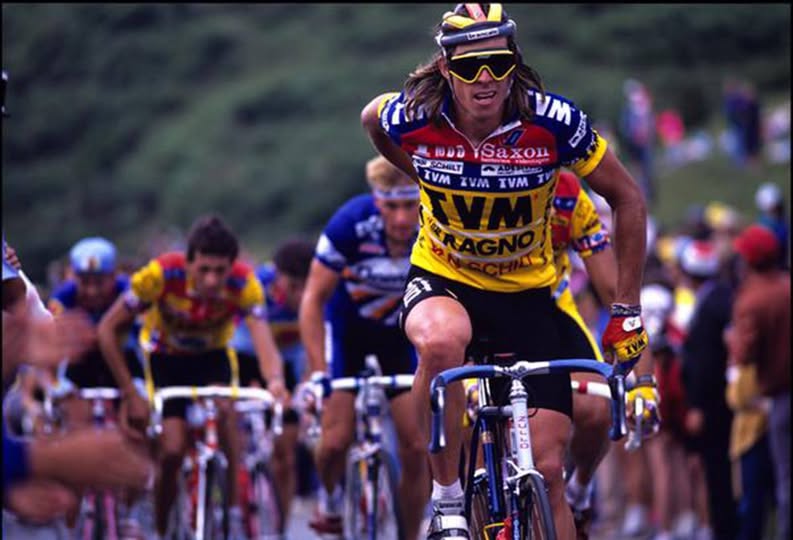
This philosophy found its way into the professional peloton. In the mid-1980s, ZULLO entered the world of elite racing—first supporting smaller teams, and then becoming a sponsor of the Dutch team TVM. Riders such as Phil Anderson rode ZULLO frames at the highest level, and the workshop expanded to meet demand. At its peak, a team of ten builders worked to produce frames for competition across road, track, and cyclocross.
Yet even in this period of growth, the focus remained unchanged: performance through craft. Frames were built to respond, to endure, and above all, to feel right beneath the rider.
When the industry shifted in the 1990s—toward aluminium, carbon, and mass production in the Far East—many Italian builders adapted or disappeared. ZULLO chose a different path. Production remained in Italy. Steel remained central. The scale reduced, but the integrity of the work deepened.
This decision, once counter to the direction of the industry, has proven quietly prescient. Today, as the global market rediscovers the value of authenticity, ZULLO frames are sought after far beyond Italy—particularly in Japan and across Asia, where Italian heritage and handmade craft are deeply understood and appreciated. Long-standing relationships, including with collaborators such as Maso in Japan, reflect a shared respect for precision, aesthetics, and continuity.
Inside the atelier, tradition and modernity coexist. Alongside sketches and decades-old frames sits a design program used to refine geometry to the millimetre. Tubing has evolved—developed in collaboration with partners such as Dedacciai—but the principles remain unchanged. Every tube, every junction, every weld serves the ride.
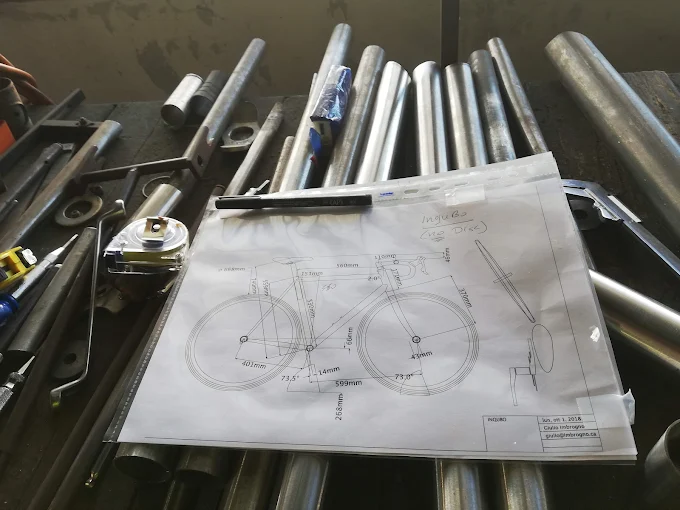
Models such as the Inqubo reflect this philosophy at its most exacting—complex in construction, uncompromising in intent, and built entirely by hand. Techniques have been refined over time: TIG welding and lug work have replaced older methods not out of convenience, but conviction. What remains is only what serves the final result.
Even during the years when ZULLO was less visible, the work did not stop. Frames continued to leave the workshop—quietly, deliberately—for those who sought them out. There was no urgency to scale, no desire to follow trends. Only a commitment to preserve a way of making that cannot be rushed or replicated.
Today, that same philosophy continues—now supported by a structure that allows the work to expand without losing its integrity. Each ZULLO frame is still built one at a time, in Verona, with the same attention to proportion, balance, and ride quality that defined the earliest examples.
The process remains deeply collaborative. It begins with the rider—how they move, how they ride, what they seek. From there, a frame takes shape. Not as a product, but as a response.
The history of ZULLO is not behind us.
It continues, with every frame that leaves the workshop.